Museums
Museo Camera Centre for the Photographic Arts
Aditya Arya's private collection of 2,500 historic cameras and prints, arranged as an actual museum with rotating photography exhibitions.
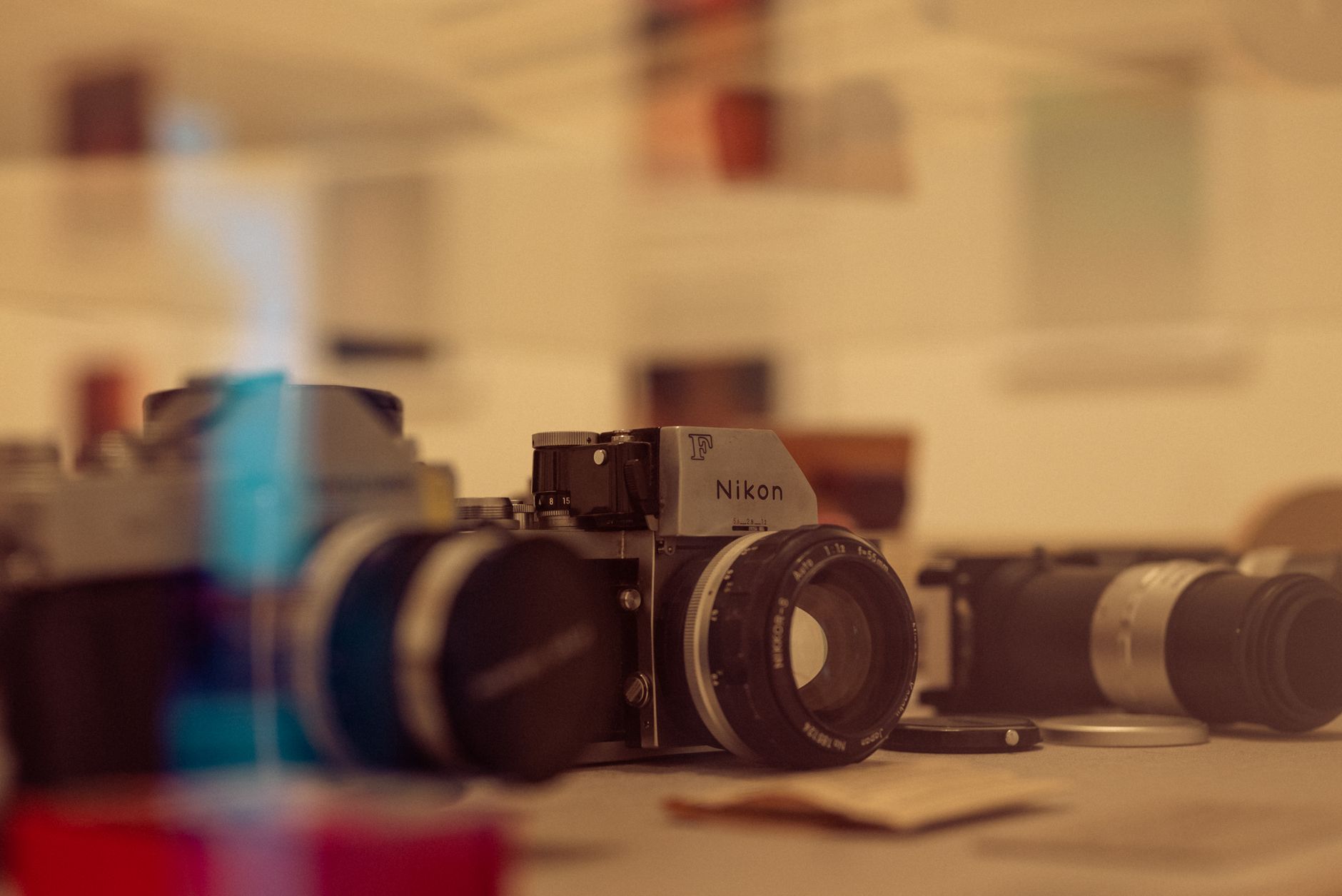
Museo Camera opened in 2019 in a purpose-built basement gallery under DLF Phase 2, and it is quietly one of the best small museums in the National Capital Region. Photographer Aditya Arya spent thirty years assembling the collection: over 2,500 cameras from an 1855 wooden plate camera through the Kodak Brownies of the twentieth century to Cold War-era Soviet Zenits. Around this core is a proper exhibition programme — three to four rotating shows a year, usually by significant Indian photographers. The building also houses the India Photo Archive Foundation, the body through which Arya has spent years digitising the negatives of Kulwant Roy, the photojournalist who documented the last years of the freedom movement. That archival work is the reason this reads as an institution rather than a rich man's cabinet of curiosities, and it is why an hour here is worth the ₹300 in a way that most private collections in the NCR are not.
The main gallery snakes through chronologically. It opens with wet-plate and daguerreotype cameras, moves through the twin-lens reflex age (Rolleiflex, Yashica), fills a full room with Leicas and Nikons, and closes with early digital hardware. Interleaved are working darkroom setups, a stereoscope corner and a wall of vintage prints. The rotating exhibitions occupy the far wing. A small cafe with decent coffee sits inside the entrance, and the shop sells photography books not easily found elsewhere in India. Beyond the display cases there is an auditorium used for talks, screenings and portfolio reviews, a reference library, and a workshop space where the museum runs cyanotype, darkroom-printing and camera-history sessions. If you only have time for one thing beyond the chronological run, make it whatever is hanging in the west wing — the cameras do not change, the exhibitions do.
Book online — the museum caps daily visitors at around 100 to keep the experience uncrowded, and weekends do sell out. Guided tours (₹100 extra) happen at 11:30am and 3:30pm on weekends and are worth doing. Allow an hour for a general visit, ninety minutes if a rotating exhibition interests you. Photography inside is allowed without flash. Combine with lunch at MG Road or Cyber Hub, both a ten-minute drive. Two or three days of lead time is enough for a Saturday slot; for a weekday morning you can usually book the same day on the phone. Leave the tripod at the hotel, and if you are carrying a large camera bag, expect to check it at the desk rather than wear it through narrow gallery sections.
Getting here is easiest by metro plus a short hop. Sikanderpur is the anchor station — the interchange between the Yellow Line and the Rapid Metro loop — and from Rajiv Chowk in central Delhi it is roughly 45 minutes and ₹50 to ₹60. From Huda City Centre at the southern end of the Yellow Line it is a few stops and about ₹20 to ₹30. Out of the station, an auto to Ram Kishore Road in DLF Phase 2 runs ₹50 to ₹80 and takes ten minutes in ordinary traffic; the fifteen-minute walk is flat but the footpaths break up in stretches, so take the auto any time the thermometer is above 35°C. Driving, the museum sits a couple of minutes off Golf Course Road; street parking near DLF Qutab Plaza fills by midday at weekends, so come before noon or take a cab. From IGI Terminal 3, budget 30 to 40 minutes and ₹500 to ₹700.
Costs are simple and worth knowing before you arrive. Entry is ₹300 for adults and ₹150 for students with a valid institution ID — a photo on your phone is often refused, so carry the card. The guided tour adds ₹100 a head, which means two adults doing the full tour leave the desk having paid ₹800. That ticket covers the whole chronological gallery and whatever is showing in the west wing; there is no separate exhibition charge, and no audio guide to upsell you. Workshops, darkroom sessions and auditorium talks are priced and booked separately and are announced on the museum's website and Instagram. The café and shop sit before the gallery entrance, so a companion who does not want to pay can wait over a coffee. The books are the real budget risk — imported photography titles here are priced accordingly, so decide before you browse.
Timing matters more than it should for a museum that caps its numbers. Tuesday to Thursday between 10:30 and 12:30 is the quiet window; you will sometimes have the Leica wall to yourself, unless a school group has been booked in, which does happen on weekday mornings. Saturday and Sunday afternoons are the busiest and the guided-tour slots at 11:30am and 3:30pm fill first. Aim to be inside by 17:15 if you want an unhurried hour before the 18:30 close. Seasonally, October to March is the obvious window for Gurugram generally, but the basement location makes this one of the better wet-afternoon and bad-air-day options in the city — a July monsoon downpour or a January morning with the AQI in the red is exactly when an air-conditioned indoor gallery earns its keep. Avoid the 2pm to 4pm slot in May and June only because getting here is punishing, not because the museum is.
It suits a specific person very well and a general sightseer only moderately. Anyone who has owned a film camera, studied design or photography, or grown up around a family Yashica will get their ₹300 back within twenty minutes. Teenagers who shoot on phones tend to engage more than parents expect, largely because of the darkroom and stereoscope corners. Small children will be bored — almost everything is behind glass and nothing is hands-on. For a one-hour gap before a train or a flight it works, provided you skip the tour and take a cab both ways. Wheelchair users and anyone with mobility limits should call ahead before travelling, since the galleries are below ground level and access arrangements are worth confirming rather than assuming. If someone in your group has no interest in cameras at all, park them in the café rather than buying a second ticket.
Fold it into a DLF Phase 2 half-day. DLF Qutab Plaza, the old market block, is a two-minute walk and useful for a quick chai or a chemist run. Cyber Hub is ten minutes by cab and is the obvious lunch stop, with enough range to satisfy a group that has just disagreed about a museum. Galleria Market in DLF Phase 4 is a similar distance and quieter at lunchtime. Sector 29's Leisure Valley Park and its restaurant strip is about fifteen minutes south if you want the evening rather than the afternoon. For a nature counterweight, Sultanpur National Park is roughly 45 minutes west and best in winter, though note it is also closed on Tuesdays, so pairing the two on the same day needs checking. If you are staying at Trident Gurgaon, The Oberoi Gurgaon or anywhere on Golf Course Road, the museum is a ten-minute cab ride and an easy pre-lunch outing.
The honest caveats. ₹300 for what is realistically a one-hour visit is more than most public museums in the NCR charge, and if you are indifferent to photographic hardware you will feel that. The name that circulates online sets a wrong expectation for some visitors: this is not a camera shop, there is no repair counter, and nothing is for sale from the collection — people do turn up hoping to value or sell an inherited camera and leave disappointed. Labelling is good on the headline pieces and thinner on the long runs of similar bodies, which is where the guided tour earns its ₹100. The rotating exhibition is genuinely variable in scale; between shows the west wing can be part-empty, so check what is currently hanging before you build a trip around it. And do not expect to handle anything — the working darkroom is a display, not a workshop, unless you have booked a session.
Hours & entry
Not free
Tue-Sun 10:30-18:30 · Mon closed
What to see
{'what': '1855 wet-plate wooden camera', 'where': 'Opening display in the main gallery'}
{'what': 'The Leica wall — 40 bodies including a IIIf from 1953', 'where': 'Central chronological gallery, mid-section'}
{'what': 'Rotating exhibition in the west wing', 'where': 'Far end of the main hall'}
Tips from the ground
Book online — Saturday afternoons sell out.
The 3:30pm guided tour is longer and less rushed than the morning one.
The cafe does a solid espresso and sells signed photography books.
Good to know
Questions, answered
What is the entry fee?
₹300 for adults, ₹150 for students; guided tour is ₹100 extra. Students must show a valid institution ID card at the desk — a phone screenshot is often refused. The ticket covers the full chronological gallery and whatever rotating show is up in the west wing, so there is no separate exhibition charge and no audio guide to buy. Workshops, darkroom sessions and auditorium talks are ticketed separately. Two adults taking the guided tour pay ₹800 in total; cards are accepted at the desk.
Are there free days?
No, but World Photography Day (19 August) has occasional free-entry promotions — check the website. Outside that there is no weekly free hour, no free evening and no concession day, which is unusual by NCR museum standards but consistent with this being a privately funded institution rather than a government one. The only reliable discount is the ₹150 student rate. The café and shop sit before the gallery entrance, so a companion who does not want to pay ₹300 can wait there over a coffee without buying a ticket.
How long is a visit?
One hour for a general look; ninety minutes with a guided tour. Roughly 35 to 40 minutes goes on the chronological run from the wet-plate cameras to the early digital bodies, and another 15 to 20 on the rotating exhibition in the west wing, depending on its scale. Collectors and working photographers routinely stretch it to two hours. If you are squeezing it into a gap before a train, 45 minutes covers the highlights — skip the tour, start at the Leica wall and cab both ways.
When is it closed?
Every Monday, and on major national holidays. Otherwise it runs Tuesday to Sunday, 10:30 to 18:30, and you want to be through the door by about 17:15 for an unhurried hour. Occasional short closures happen while one rotating exhibition comes down and the next goes up, so if the west wing is your reason for coming, call or check the website first. On a Monday in Gurugram, the fallback within ten minutes is Cyber Hub for lunch or Galleria Market in DLF Phase 4.
Do I need to book?
Yes for weekends; walk-ins are fine on weekdays. Daily numbers are capped at around 100 to keep the galleries uncrowded, so Saturday and Sunday afternoons genuinely sell out — two or three days of lead time is enough. The 11:30am and 3:30pm weekend guided-tour slots fill before general entry, so book those first if you want one. Weekday mornings between 10:30 and 12:30 are the quietest and can usually be booked the same day, though school groups do occasionally take that window.
Nearest metro?
Sikanderpur on the Yellow Line, then a ten-minute auto or a fifteen-minute walk. Sikanderpur is also the interchange with the Rapid Metro loop through DLF, which is useful if you are coming from Cyber City. From Rajiv Chowk in central Delhi it is about 45 minutes and ₹50 to ₹60; from Huda City Centre it is a few stops and ₹20 to ₹30. The auto to Ram Kishore Road costs ₹50 to ₹80. Walk only in cool weather — the footpaths through DLF Phase 2 break up in stretches.
Doing good is the business: every booking through Stay Gurugram funds one verified tonne of carbon removal — same room, same price, no markup.
Start your search